
reative block is almost always an undefined next action wearing a dramatic costume. The cure is unglamorous: decide what the specific next thing is.
Featured in this article
Arwign Notebook — Studio
Here's the test. Next time you're stuck, ask yourself one question: what, specifically, am I trying to make in this session?
If the answer is "work on the novel", "do some design", "make progress on the album" — you're not blocked. You've sat down with a category instead of a task, and the resulting paralysis is the entirely reasonable response of a brain given no instruction.
Try it again with: "draft the scene where she finds the letter", or "three layout options for the second page", or "the chord progression for the bridge". Notice that the stuckness tends to evaporate, and what's left is just the normal difficulty of doing the work.
The two modes you're running at once
The other major cause is doing two incompatible jobs in the same moment.
Generating is making things — fast, loose, uncritical, quantity over quality. Judging is evaluating them — slow, critical, selective.
Both are essential. Run simultaneously, they cancel out. You write four words, judge them inadequate, delete them, write four more. An hour later there's one sentence you don't like and no momentum at all.
You cannot generate and judge in the same breath. Most creative block is a critic working the morning shift.
So split them explicitly, and ideally put a night between them. Morning session: make things, badly, at volume, with no deleting allowed. Later session, different day: throw most of it away. The judging is much better when it's done on material that exists, and the generating is much better when nothing is being assessed.
Write a brief, even when the client is you
Professionals get briefs. The brief is what makes a commission easier than a personal project — somebody has already answered the hard questions about scope and purpose.
For your own work, nobody does that, so do it yourself. Five lines, before you start:
The one-page brief
- What is this? One sentence. "A thirty-page zine about my grandmother's garden." Specific enough to be finishable.
- Who's it for? Even if the answer is just you. It settles a hundred later decisions.
- What's the constraint? Length, format, palette, instrumentation, budget. Constraints are not the enemy of creativity; blank space is.
- What does "done" look like? The thing most personal projects never define, which is why they never end.
- What's the next specific action? One, small, finishable in a single sitting.
Keep it at the front of the project. When you feel blocked, read it. The majority of the time the block is that one of those five answers has gone vague, and you can feel it without being able to name it.
Stop mid-flow, on purpose
A trick used by a great many working writers and makers, and it's counterintuitive: end each session in the middle of something, not at a natural stopping point.
Finish a chapter and tomorrow you face a blank page and a decision about what happens next. Stop halfway through a sentence you already know the end of, and tomorrow you sit down and simply continue — and you're working within thirty seconds instead of circling for forty minutes.
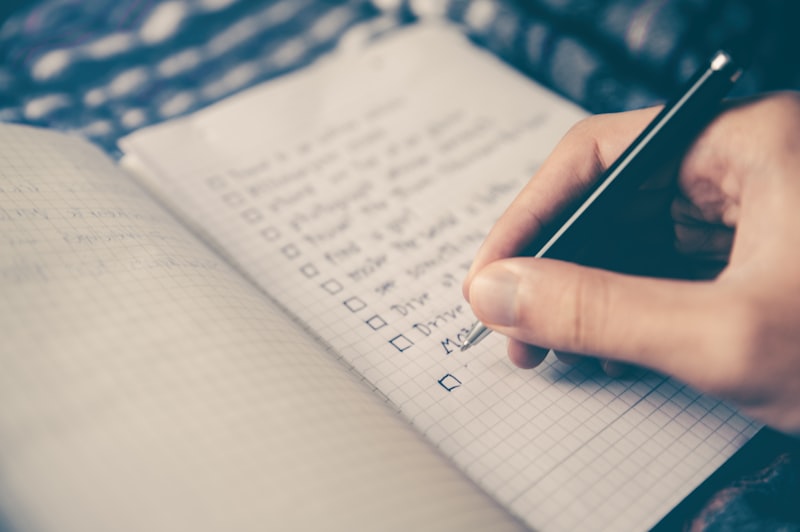
Combine it with the habit of writing your next action down before you close the notebook, and you've eliminated the single most expensive part of creative work: starting.
Volume beats inspiration
The last thing, and it's the most liberating.
People who make a lot of things are not waiting to feel inspired. They have a schedule — fixed sessions, whether or not the mood is there — and they accept that a good proportion of what they produce will be mediocre.
That's not a compromise. It's the mechanism. You cannot reliably produce good work directly; you can only produce a quantity of work and then select the good parts. The ten percent that's excellent only exists because the other ninety was made.
Which means the practical goal isn't "be brilliant on Tuesday". It's "produce something on Tuesday", repeatedly, and let selection do the rest. Scheduled mediocrity, honestly pursued, comfortably outperforms waiting to feel ready — and it's the only version of a creative practice that actually survives contact with a job, a household and a tired week.
The fifteen-minute unblock
- Write the one-page brief: what, who for, constraints, what done looks like, next action.
- Make this session's task specific enough to finish in one sitting.
- Separate generating from judging — different sessions, ideally different days.
- End today mid-sentence, and write the next action before you close the book.
- Put two fixed sessions a week in the diary, regardless of mood.
Our project planners include a brief page, session logs and a next-action line — built for work with no client and no deadline but your own. Browse the planners →
Planners for this article
Arwign Notebook — Studio
A roomy studio notebook for getting unclear thoughts onto the page — where most "blocks" quietly turn into a plan.
ViewThe Deep Dive
ViewClear Mind, Clear Desk
ViewPlan it in Arwign Calendar
Written by
David @Arwign
Writes for Arwign Planners about the systems, science and small habits behind a calmer, more intentional life.
Explore our planners

Comments (0)
Sign in to join the conversation.
Be the first to comment.